Therapy for people of mixed and multi-racial heritage
Welcome to Space of Hope Counselling
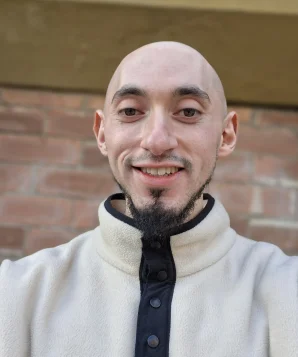
Hi, I'm Yasin (he/him), a mixed-heritage BACP registered Integrative Counsellor and Therapist. Starting therapy takes courage and strength - so firstly, I commend you for contemplating taking this first step and I'm glad you're here.
You don't need to be the most confident or self-assured version of yourself with me. You can be however you feel - it's all welcome.
Key details
- My fee is £50 per session - but I offer reduced rates for specific groups - see bottom of this page.
- I offer a free 20 minute consultation (phone or video).
- I provide online sessions only, for adults (over 18) that live in the UK.
Examples of issues I can help you with
I'm particularly experienced in working with people of mixed-heritage backgrounds and people from marginalised communities. Mixed-heritage families can hold the most beautiful blend of culture, stories, traditions and ways of expressing love. But they can also be complex and foster racial, cultural and even religious tensions and prejudice. For many mixed-heritage people, those tensions within mixed families don’t just go away over time, they might just look or sound different. That deserves compassion and understanding.
Because of my own mixed-heritage, I feel particularly passionate about supporting mixed people.
Please note; I don't exclusively work with people of mixed-heritage, I welcome people of all backgrounds and identities.
Down below, I've outlined a range of issues and experiences I work with.
- Damage caused from early-life experiences and formative relationships
- Struggles with identity, belonging or exclusion
- Difficulties in your relationships
- Worries about the future and what you want for yourself
- Feeling alone, isolated or disconnected
- Feeling low or depressed
- Strained relationship/s with family members
- Self-esteem, confidence and not feeling good enough
- Racial, cultural or religious difficulties
- Discrimination, racism and ableism
- Hair loss
This is not an exhaustive list. If you think we'd be a good fit, I'd gently encourage you to still reach out - so we can discuss what's happening for you and if we might work well together.
Getting started
Early on, we can get to know each other a little bit. It's often at this stage that we might talk about what you might want from therapy and our time together. Collaboratively, we can then discuss how you're finding things along the way.
Examples could include:
- Understanding yourself more - like why you might be feeling a bit numb, low or anxious.
- Uncovering what might be behind the struggles in your various relationships.
- Processing the long-term impacts of damaging events or periods of time from your childhood.
- Just having a space to express yourself freely and fully, without judgement.
- Finding ways to cope with anxiety or stress - and the physical symptoms that come with it.
- Coming to terms with big changes, like a painful break up.
- Or maybe, there's something else you'd like to focus on - which I'd be more than happy to discuss with you in your free consultation.
We can also regularly review the the therapy, as we go - and make suitable adjustments along the way.
My style of therapy
I'm an Integrative and relational Therapist which means I use a mix of approaches to suit you and what you're coming with. It also means I believe the quality of our relationship matters deeply - I'm not a blank slate or an expert, I'm a fellow human being that cares. My two main therapeutic approaches are person-centred therapy and psychodynamic therapy.
Person-centred therapy is non-directive, meaning it's led by you. There's no homework and you have full say on what to bring and when to bring it. It's centred around trust, support and openness between us - where you can talk freely about your honest thoughts, feelings, emotions and beliefs, without judgement and to hear your inner voice.
Psychodynamic therapy: The root causes of our struggles are often hidden from our conscious (obvious) awareness - and many of the difficulties we face as adults will stem from difficult experiences from our childhood. Experiences that might be filled with things like neglect, damaging events, constant stress or conflict at home, discrimination and more. This approach to therapy helps us to look at how the stuff from our past (that's probably hard to remember) might be driving the difficulties we face in the here and now. It's about helping you understand yourself on a deeper level and find meaningful change and growth.
Some benefits to these types of therapy
- You'll have full control of the pace and direction of the therapy - this is your space.
- You can understand yourself more and figure out why you feel the way you do.
- You can come to terms with difficult early-life experiences, that might be causing you issues now.
- You can get to know the core beliefs and emotions that are working behind the scenes - and causing you difficulty now.
- You can learn about your repeated patterns - and build new ones.
- You can find long-lasting change and personal growth.
Working online
There's some benefits to working online, and some things worth considering in deciding if it's right for you.
Benefits include:
- More able to balance our sessions with your work-life, family-life or other commitments.
- You can save time and money on car journeys, train journeys or bus rides.
- You can join from the comfort of your own home - which might be particularly helpful if you're needing to manage a disability or health-condition.
However, there are a few important things to consider when thinking about having counselling sessions online:
- Are you comfortable using internet technology like Zoom?
- Do you have access to a space that you can use privately without interruption or being overheard?
- Do you feel safe in your own home or the location you'd be joining from?
My own experience in Therapy
I first went to talking therapy as a young person in secondary school and then again in my adult life. Working with a counsellor gave me a consistent and safe space to put words to my feelings and emotions, and to make sense of what I was going through.
Counselling also helped me to unpack how my early-life experiences were shaping my present. At that time in my life, I wanted to understand myself more;
- Why I felt a deep hunger for validation.
- Why certain situations made me feel like a powerless child.
- Why certain life changes worried me so much.
- The impacts of being mixed-heritage - my identity and search for belonging.
With time and compassion, counselling helped me to start finding some answers to those questions, helping me form a different kind of relationship with myself - a more gentle and understanding one.
It's why I chose to become a counsellor myself; to offer others what was given to me.
A few things to know before we start
- What we discuss during our sessions is confidential - it's rule number 1 in counselling.
- There is no right or wrong way for you to do counselling and you won’t be judged on how you’re performing.
- Counselling often involves talking about difficult topics. So, it’s very normal for things to feel a bit worse before they feel better.
- Counselling is not about quick fixes or expert advice. It involves helping you to understand yourself on a deeper level - so that you can find meaningful change and growth.
Additional support for Disabled and Neurodivergent people
If you're Disabled or Neurodivergent, I would welcome having an open conversation with you to discuss adjustments we can put in place to make sure you feel supported. This could mean:
- Full flexibility around late cancellations for illness flare ups and pain flare ups.
- Factoring in short breaks within our session - to help you process things at your pace.
- Enabling subtitles/captions on our video calls.
- A short summary of our conversation emailed over at the end of each session (3-5 bullet points of key themes).
It's really important to me that you feel able to share what you feel you might need. This can absolutely be an ongoing conversation we have, as what you need might change over the course of our time together.
My training and experience
- Diploma in Therapeutic Counselling from the Counselling and Psychotherapy Training Academy in North London (CPCAB approved course).
- Certificate in Counselling Studies from the Counselling and Psychotherapy Training Academy in North London (CPCAB approved course).
- Award in Counselling Skills from Morley College (CPCAB approved course)
- Certificate in Online and Telephone Counselling (80 hours).
- A fully registered member of the BACP (British Association for Counselling and Psychotherapy).
- Experience working with a diverse range of of client groups including mixed-heritage clients, LGBTQ+ clients, racialised clients and most commonly men aged 21-40.
- Continuous Professional Development certificate in the Intersection of Privilege and Otherness
- Continuous Professional Development certificate in supporting people with Depression
- Continuous Professional Development certificate in supporting Disabled clients
- Continuous Professional Development certificate in supporting Millennial clients
- Continuous Professional Development certificate in working inclusively with the LGBTQ+ community
- Continuous Professional Development certificate in Counselling and Psychotherapy with Queer clients
- Experience working in a leading London-based counselling agency for adults - and now in my own private practice.
Need urgent support right now?
I am unable to offer urgent crisis support. If you feel that you need emergency support or are in a crisis right now, here are some phone lines you can contact for instant support.
- Call the NHS 111 phone line and select option 2
- Call the Samaritans on 116 123
- Visit your local A&E
Our sessions
Sessions will last 50 minutes, usually taking place weekly and are held online via Zoom. I will send you a link shortly before our session each week and you'll just need to click on the link at our agreed time to join.
Fees
The cost is £50 per session.
For people on lower incomes:
I feel strongly about making Therapy more accessible - so where possible I offer a few low-cost spaces for certain groups. This includes anyone that's unable to work due to a long-term disability or health condition, anyone receiving universal credit, anyone earning below £25,000 a year and counselling students. This is something I'd be happy to discuss in our initial consultation.
Free initial consultation
It's really important that you feel we'd be a good fit. I offer a completely free and confidential 20 minute phone consultation.
This is an informal conversation where we can discuss what's brought you here and establish if I'd be a suitable fit for what you're looking for.
Contact me whenever you feel ready
Please complete the below form to enquire about working with me. I aim to get back to you within 48 hours.
©Space of Hope Counselling
powered by WebHealer